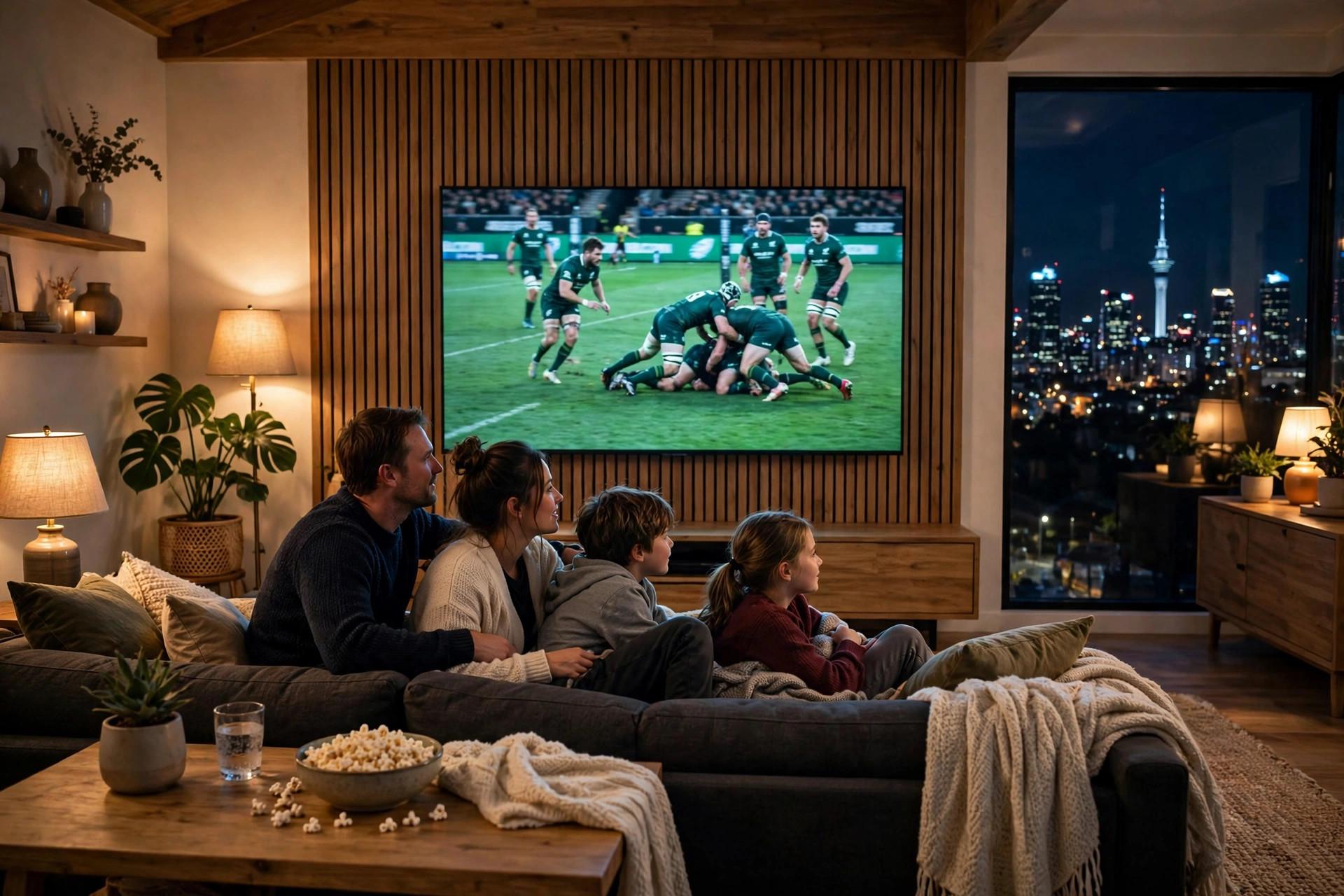
People searching for IPTV Auckland Wellington Christchurch usually want one thing: the setup that works in their city, on their fibre. New Zealand is a small country with three big cities and a lot of distance between them, and the television habits differ more than the distance suggests. Auckland watches the Blues and the Warriors, Wellington watches the Hurricanes and the All Blacks at Sky Stadium, and Christchurch watches the Crusaders at Orangetheory Stadium. The subscription is the same in all three — the difference is the house, the internet and the routine around the match.
The other difference is the living situation. Auckland has more apartments and rentals, Wellington has more hills and wind, and Christchurch has more new subdivisions with fibre to the door. All three have the same answer for the television: the service follows the login, so it moves house with you, and the setup is the same five minutes on a Firestick or a Smart TV.
IPTV Auckland Wellington Christchurch: City Guide
Auckland is the biggest IPTV market in the country, and the most complicated to set up well. Apartments in the CBD and the inner suburbs have fibre to the building, but the Wi-Fi in a concrete apartment is a different problem: the router is in the hallway, the TV is two rooms away, and the neighbour's network is on the same channel. Ethernet is often impossible in a rental, so a mesh node in the lounge is the fix that works in most Auckland flats.
The sport in Auckland is the Blues on Friday nights at Eden Park and the Warriors at Go Media Stadium, and the household that watches both needs the full Sky Sport group plus the EPG in New Zealand time. A two-device plan covers the lounge TV and the bedroom TV in a flat with two viewers — the 12-month two-device Premium plan at $159.99 is the usual pick. Fix buffering in a flat before the next home game.
IPTV in Wellington: wind, hills and Sky Stadium
Wellington is the windiest city in the country, and the wind matters for one reason only: it is the reason the satellite dish on the roof is a bad idea, and the reason IPTV over fibre is the better answer. The fibre in Wellington is good — the CBD, the inner suburbs and the Hutt Valley all have Chorus fibre — and the Hurricanes at Sky Stadium are the Friday night fixture that fills the living rooms from Karori to Upper Hutt.
The practical detail in Wellington is the house: older villas with thick walls and a router in the wrong room. A mesh system with a node in the lounge fixes more than any plan upgrade, and a Firestick 4K Max with Wi-Fi 6 handles the rest. The All Blacks tests at Sky Stadium are the biggest nights of the year, and the trial is the way to test the setup before one. Check the All Blacks guide.
IPTV in Christchurch: new subdivisions and the Crusaders
Christchurch is the easiest city in the country to set up IPTV, because the new subdivisions in Rolleston, Halswell and the north-west were built with fibre to the door and the router in the lounge. The Crusaders at Orangetheory Stadium are the Saturday fixture, and the household that watches them plus the Black Caps at Hagley Oval needs the full Sky Sport group in 4K.
The older suburbs are the exception: a 1970s house in Riccarton or Merivale with the router in the hallway and the TV in the lounge has the same Wi-Fi problem as an Auckland flat, and the same fix — Ethernet where possible, a mesh node where not. The rest of the country follows the same pattern: Hamilton and Tauranga have good fibre and the Chiefs, Dunedin has the Highlanders at Forsyth Barr, and the setup is the same five minutes everywhere. See the setup guides.
Rentals, flats and moving house
IPTV is the best television for a rental, because there is nothing to install and nothing to leave behind. No dish on the roof, no box to return, no holes in the wall. The subscription follows the login, so a move from Auckland to Hamilton, or from a flat in Wellington to a house in Christchurch, takes the television with it — log in on the new TV and the channels are there.
For a flat with three or four people, the multi-device plan is the honest answer: two devices at $159.99 a year, three at $224.99, four at $269.99 on Premium. Each person watches what they want, on their own screen, and the bill is split four ways. Start a free trial in the flat before the next match, and let the household decide together.
Hamilton, Tauranga and the Chiefs
Hamilton is the home of the Chiefs, and the city follows Super Rugby Pacific with the same intensity as Auckland follows the Blues. FMG Stadium Waikato fills on Friday nights, the Chiefs play a fast, attacking game, and the household that watches them needs the full Sky Sport group plus the EPG in New Zealand time. The fibre in Hamilton is good — the city was part of the early Ultra-Fast Broadband rollout, and most houses have fibre to the door with the router in the lounge. The setup is the same five minutes as everywhere else: a Firestick 4K Max, a Samsung or LG Smart TV, or an Android TV box, and the channels load. The Super Rugby guide covers the season, and the buffering guide walks through the checks if anything freezes.
Tauranga is the fastest-growing city in the country, and the new subdivisions were built with fibre to the door and the router in the lounge — which makes Tauranga one of the easiest cities in the country to set up IPTV. The household that watches the Chiefs from Tauranga, or the Black Caps at Bay Oval in Mount Maunganui, needs the same setup as Hamilton: the full Sky Sport group in 4K, the EPG a week ahead, and the favourites set on day one. The beach is the other half of the Tauranga story: the cricket at the beach in Mount Maunganui, the Warriors on the phone on the train, the news at the bach with no TV — the same login works on the phone through IPTV Smarters Pro, and the app works on mobile data, though a two-hour match in HD uses roughly 3 GB. The Black Caps guide covers the summer at Bay Oval.
Dunedin, the Highlanders and Forsyth Barr
Dunedin is the home of the Highlanders, and Forsyth Barr is the ground that changes the game: a roof over the field, no rain, no wind, and the ball stays dry even in a southern winter. The Highlanders play under the roof on Friday and Saturday nights, and the household that watches them needs the full Sky Sport group in 4K, because the roof makes the picture brighter and the ball sharper than any outdoor ground. The fibre in Dunedin is good — the city was one of the first in the country to get fibre, and the Gigatown history means the network is strong — but the houses are the challenge: older villas with thick walls, a router in the hallway, and a TV in the lounge two rooms away. A mesh system with a node in the lounge fixes more than any plan upgrade, and a Firestick 4K Max with Wi-Fi 6 handles the rest.
The southern winter is the other half of the Dunedin story: the cold, the early dark, and the long evenings indoors, which is when the television earns its keep. The Highlanders on Friday night, the All Blacks tests at Forsyth Barr, the Black Caps in the summer — the subscription covers all of it, and the annual Premium plan at $99.99 covers the whole year for about $8.33 a month. The All Blacks guide covers the test calendar, and the fibre speed guide shows how much speed each screen needs in a house with thick walls and a router in the wrong room.
Smaller towns and the regions
The regions follow the same pattern as the cities, with one difference: the internet. Whangarei, Rotorua, New Plymouth, Napier, Palmerston North, Nelson, Queenstown and Invercargill all have Chorus fibre in the towns, and the setup is the same five minutes as Auckland — but the houses outside the towns, on the farms and the lifestyle blocks, run on copper VDSL or fixed wireless, and those connections need more care. A 4K stream on a 30 Mbps VDSL line is tight, and HD is the honest setting, because a 4K stream needs about 25 Mbps steady and a VDSL line that delivers 30 Mbps on a good day delivers less on a wet day. The check is the same as everywhere: test on the TV itself, at 7:30 pm, and trust the number the TV gives you.
The sport in the regions is the same sport as the cities, because the Sky Sport channels do not change with the postcode. The household in Invercargill watches the same All Blacks test as the household in Auckland, at the same time, on the same channel — and the subscription follows the login, so a move from a farm in Southland to a flat in Dunedin takes the television with it. The resellers in the regions are often the ones who last longest, because the town is small, the customers are people they already know, and the trust is personal — the rugby club, the league club, the workmates who complain about the Sky bill. The reseller guide covers the business, and the price breakdown shows the retail prices the customers see.
Moving between cities: the subscription follows you
IPTV is the best television for a move, because there is nothing to install and nothing to leave behind. No dish on the roof, no box to return, no holes in the wall, no installation appointment to book and no cancellation fee to pay. The subscription follows the login, so a move from Auckland to Hamilton, or from a flat in Wellington to a house in Christchurch, takes the television with it — log in on the new TV and the channels are there, with the favourites, the EPG and the reminders intact. The only thing that changes is the broadband: the new house needs a fibre plan, and the Chorus website shows the address and the date if the house does not have fibre yet. Check the address before the move, book the broadband for the moving day, and the television is working on the first night in the new house.
For a flat with three or four people, the multi-device plan is the honest answer: two devices at $159.99 a year, three at $224.99, four at $269.99 on Premium. Each person watches what they want, on their own screen, and the bill is split four ways. For a family moving cities, the annual plan is the obvious pick — $99.99 for the year, about $8.33 a month, and the subscription moves with the family, not the house. Start the free trial in the flat before the next match, and let the household decide together — the trial on a Friday night, the rugby on Saturday, and the decision with the game on the screen. The free trial guide shows how to test the whole household in 24 hours.
Auckland watches the Blues and the Warriors, Wellington watches the Hurricanes and the All Blacks at Sky Stadium, and Christchurch watches the Crusaders at Orangetheory Stadium — but the subscription is the same in all three, and the difference is the house, the internet and the routine around the match. Sort the house, sort the internet, and the television sorts itself.
The weekend routine in any New Zealand city
The routine is the same in Auckland, Wellington, Christchurch, Hamilton, Tauranga and Dunedin, because the fixtures are the same and the channels are the same — only the house changes. Thursday night is the EPG check: open the guide, mark the weekend games, set the reminders, and leave Sky Sport 1, Sky Sport 4, TVNZ 1 and Three in favourites. Friday night is the first game, usually at 7:05 pm, and the ten-minute check before kick-off — open the app, confirm the picture is clean, confirm the EPG has loaded — is the habit that saves the evening. Saturday is the long day, with the afternoon games and the evening game, and Sunday is the replay and the highlights show. Build that routine once, in whatever city the household lives in, and the season runs itself from February to June, with the Rugby Championship, the northern tour and the Black Caps summer following the same shape through the rest of the year.